

메시지를 남겨주세요
메시지를 남겨주세요
저희는 화장품 포장 맞춤 제작 서비스를 제공합니다. 요구 사항을 남겨주시면 최대한 빨리 답변드리겠습니다!

Material Structure and Manufacturing Process of Sheet Tubes (Laminated Tubes)

Jul 29 , 2026
편집자 이름

저희는 원스톱 맞춤형 화장품 포장 서비스를 제공하는 공장으로, 화장품 튜브, 짜는 튜브, ABL 튜브, PBL 튜브, 에어리스 펌프 튜브, 립글로스 튜브, 스킨케어 튜브 등 다양한 제품을 20년 이상 맞춤 제작해 온 풍부한 경험을 보유하고 있습니다. PCR(소비 후 재활용) ) 튜브 , 등.

편집자 이름

In the cosmetics, skincare, personal care, and functional packaging industries, tubes are one of the most widely used packaging solutions.

Among various tube packaging options, sheet tubes, also known as laminated tubes, are a popular choice for brands requiring premium appearance, excellent barrier performance, and reliable production consistency.

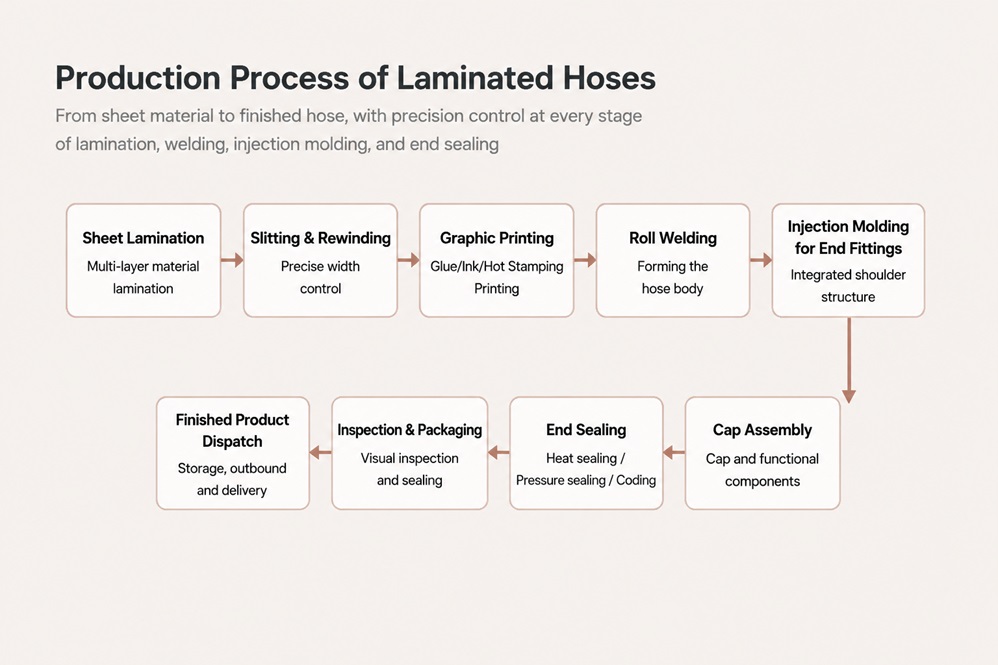
Unlike traditional plastic extrusion tubes, laminated tubes are not produced by directly extruding plastic into a tube shape. Instead, multiple layers of materials are first laminated into a flat sheet, which then goes through a series of processes including slitting, printing, tube forming, side sealing, shoulder molding, cap assembly, and tail sealing to create the final tube package.

This manufacturing method gives sheet tubes excellent advantages in visual presentation, barrier protection, structural strength, and large-scale production stability.


01 What Is a Sheet Tube?

The key feature of a sheet tube is “forming the sheet first, then making the tube.”

During production, manufacturers select different laminated sheet structures according to the product formula, packaging requirements, and application environment.

After the laminated sheet is printed and decorated, it is rolled into a cylindrical shape and sealed along the side to form the tube body. The tube shoulder, nozzle, and cap are then assembled to complete the final packaging solution.

Compared with traditional PE extrusion tubes, laminated tubes are better suited for:

Therefore, they are widely used for skincare creams, sunscreen products, facial cleansers, toothpaste, body lotions, hair care products, and other functional personal care packaging applications.


02 Material Structure of Laminated Tubes

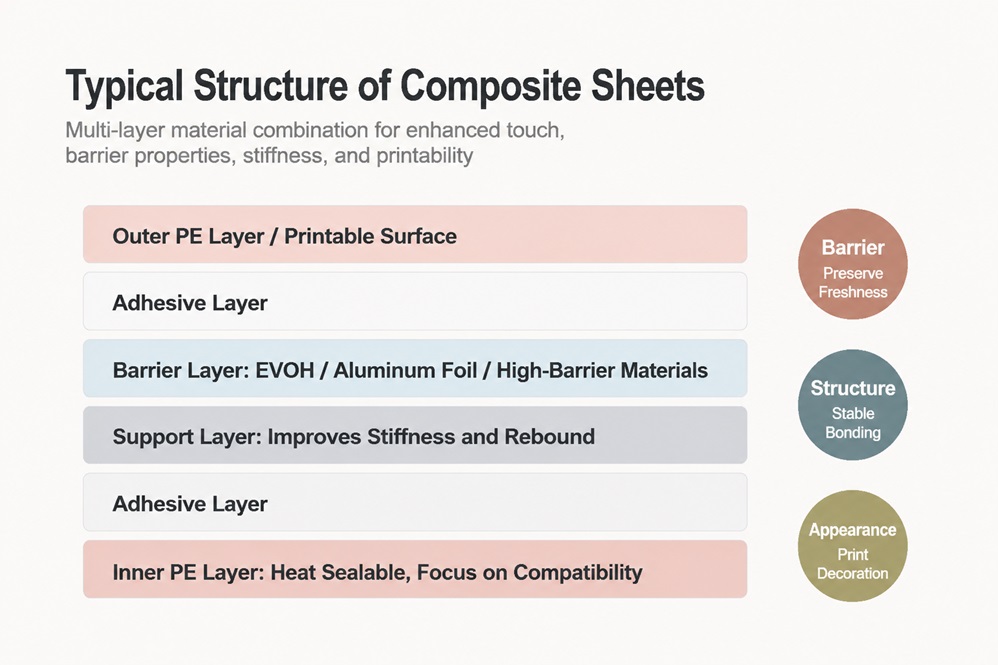
A laminated tube is not made from a single material. Instead, it consists of multiple layers, with each layer serving a specific function.

Outer Layer

The outer layer mainly determines the tube’s appearance, surface feel, and printing performance.

It requires excellent surface smoothness and printing compatibility to support various decoration processes, including:

  • Offset printing
  • Screen printing
  • Hot stamping
  • Foil stamping
  • Matte finishing
  • Glossy finishing
  • Spot UV coating

The outer layer plays an important role in creating a premium packaging appearance and strengthening brand recognition.

Adhesive Layer

The adhesive layer is used to bond different materials together.

A high-quality adhesive layer helps prevent problems such as:

  • Layer separation
  • Bubble formation
  • Structural failure during processing or use

It ensures stable performance throughout manufacturing, filling, transportation, and consumer usage.

Barrier Layer

The barrier layer is one of the most important functional layers in laminated tube structures.

Common barrier materials include:

  • EVOH
  • Aluminum foil
  • Other high-barrier materials

These materials help reduce the penetration of:

  • Oxygen
  • Moisture
  • Fragrance components
  • External contaminants

As a result, they improve product stability and extend shelf life, especially for formulas containing active ingredients, essential oils, or oxidation-sensitive components.

Supporting Layer

The supporting layer provides:

  • Tube stiffness
  • Shape retention
  • Better squeezing experience
  • Improved shelf display performance

It helps the tube maintain a more premium appearance during storage and daily use.

Inner Layer

The inner layer directly contacts the product formula.

Therefore, it must meet requirements related to:

  • Formula compatibility
  • Safety standards
  • Sealing performance
  • Chemical resistance

In practice, the best laminated tube structure is not necessarily the one with the most layers. The ideal solution is a balanced design based on product characteristics, cost requirements, and packaging expectations.


03 Manufacturing Process of Sheet Tubes

The production of laminated tubes usually includes several key manufacturing steps.

1. Sheet Lamination

According to product requirements, materials such as PE, barrier films, and adhesive layers are combined into a multi-layer laminated sheet.

The lamination quality directly affects:

  • Sheet flatness
  • Layer bonding strength
  • Tube forming stability

A well-controlled lamination process is the foundation of high-quality tube production.

2. Slitting and Rewinding

After lamination, large rolls of laminated sheets are slit according to the required tube diameter and production specifications.

During this stage, manufacturers control:

  • Cutting width accuracy
  • Edge smoothness
  • Rewinding tension

These factors directly influence the precision of the tube-making process.

3. Surface Printing and Decoration

One major advantage of laminated tubes is that printing can be completed before tube forming.

This allows manufacturers to achieve more precise and stable visual effects.

Common decoration options include:

  • Offset printing
  • Silk screen printing
  • Hot stamping
  • Silver stamping
  • Matte finishing
  • Gloss finishing
  • Partial UV coating

These processes help brands create distinctive packaging designs and improve shelf appeal.

4. Tube Forming and Side Sealing

After printing, the laminated sheet is rolled into a tube shape using specialized tube-making equipment.

The side edge is then sealed to form the tube body.

Important quality factors include:

  • Side seam strength
  • Seam width consistency
  • Seam appearance

These directly affect the durability and appearance of the finished tube.

5. Shoulder and Nozzle Molding

After tube body formation, the shoulder and nozzle are produced through injection molding.

This process determines:

  • Tube sealing performance
  • Product dispensing smoothness
  • Compatibility with caps and functional closures

6. Cap Assembly, Tail Sealing, and Inspection

The final production steps may include:

  • Cap installation
  • Labeling
  • Tail sealing
  • Batch coding

Finished tubes are inspected through various quality control procedures, including:

  • Appearance inspection
  • Dimensional testing
  • Leakage testing
  • Pressure resistance testing
  • Drop testing

These inspections ensure that the final products meet quality and delivery requirements.

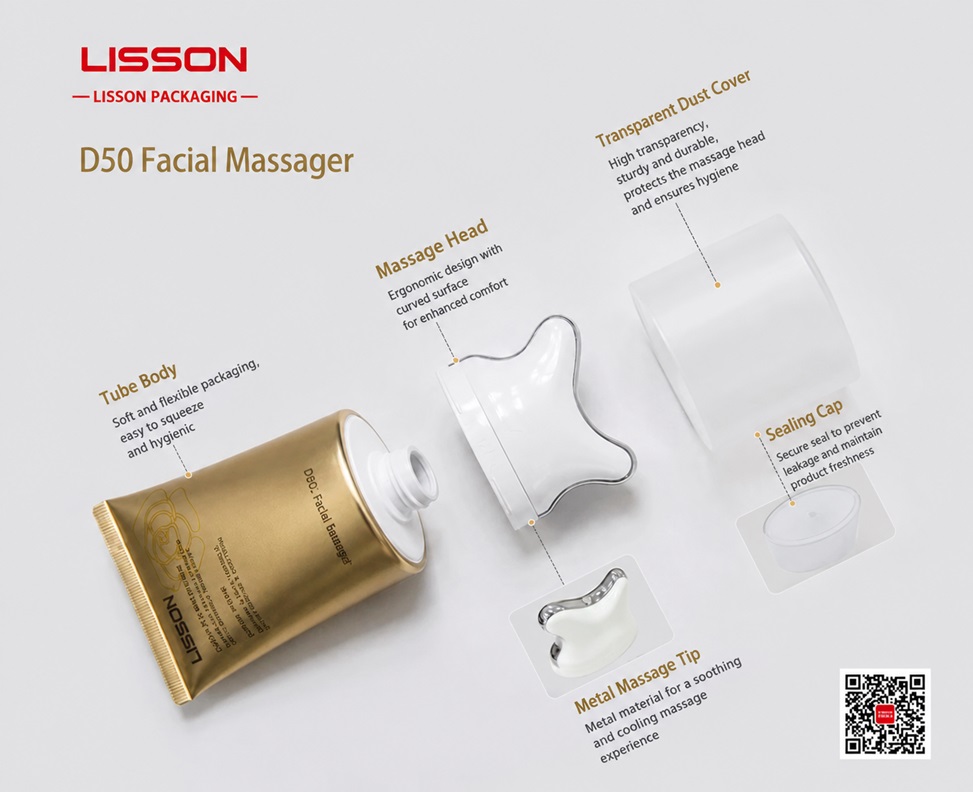
Facial Massager Tube


04 Advantages of Laminated Tubes

1. More Flexible and Premium Appearance Options

Since printing is completed at the sheet stage, laminated tubes can achieve more sophisticated designs, including:

  • Fine graphics
  • Large-area color backgrounds
  • Gradient effects
  • Metallic finishes
  • Premium textures

This makes them ideal for brands seeking stronger visual differentiation.

2. Customizable Barrier Performance

By adjusting the barrier layer materials and thickness, laminated tubes can be customized for different product requirements.

For example, products containing:

  • Fragrance ingredients
  • Oils
  • Active ingredients
  • Oxidation-sensitive formulas

can benefit from enhanced barrier structures to improve product protection.

3. Better Tube Stiffness and User Experience

The multi-layer structure provides better shape stability and a more premium hand feel.

Compared with standard tubes, laminated tubes often provide:

  • Better shelf presentation
  • Improved structural strength
  • More comfortable squeezing experience

4. Suitable for Large-Scale Production

Laminated tube technology offers excellent control over:

  • Printing consistency
  • Product appearance
  • Manufacturing stability

Therefore, it is widely used for medium-to-high-end product lines and customized packaging projects.


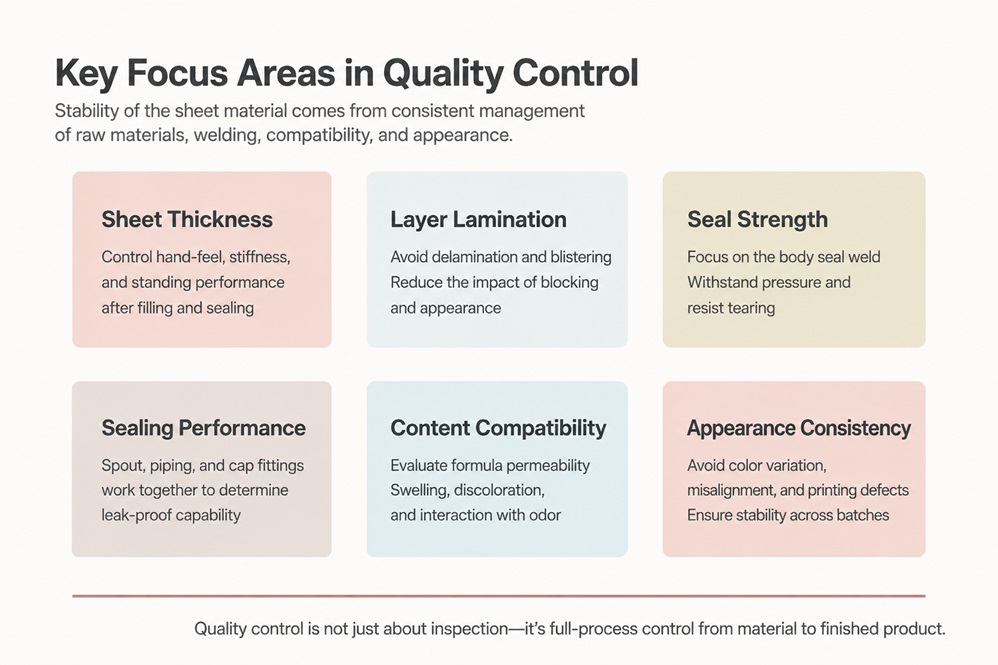
05 Key Quality Control Points

The quality of laminated tubes depends not only on the final appearance but also on the entire material and manufacturing process.

Thickness Control

Tube thickness affects:

  • Hand feel
  • Elastic recovery
  • Sealing stability
  • Final product appearance after filling

Proper thickness control ensures both performance and user experience.

Layer Bonding Strength

Insufficient bonding between layers may cause:

  • Delamination
  • Bubbles
  • Edge lifting

Strong layer adhesion is essential for long-term reliability.

Side Seam Strength

The side seam is a critical structural area of the tube.

It must withstand:

  • Pressure during filling
  • Repeated squeezing
  • Transportation impact

Sealing Performance

The tube shoulder, nozzle, cap, and tail sealing system together determine leakage resistance.

Reliable sealing is especially important during transportation and long-term storage.

Compatibility Testing

Different formulas may interact differently with packaging materials.

Compatibility testing should evaluate possible issues such as:

  • Material penetration
  • Swelling
  • Color changes
  • Precipitation
  • Odor changes

Appearance Consistency

Visual quality directly affects brand image.

Important inspection points include:

  • Color difference
  • Printing alignment
  • Foil stamping position
  • Surface scratches
  • Seam appearance

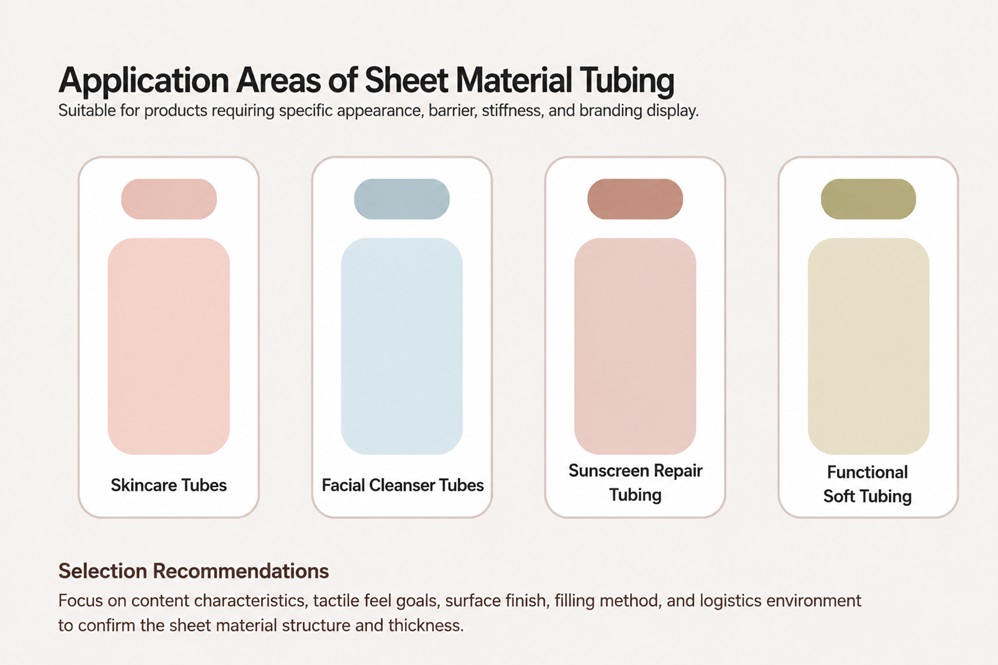
06 Common Applications of Laminated Tubes

Laminated tubes are widely used in various industries, including:

Skincare Products

Applications include:

  • Facial creams
  • Lotions
  • Sunscreen
  • Repair creams
  • Body lotions

Cleaning Products

Applications include:

  • Facial cleansers
  • Makeup removers
  • Scrubs
  • Shampoo and hair care products

Oral Care and Personal Care Products

Applications include:

  • Toothpaste
  • Hand creams
  • Foot creams
  • Deodorant products

Functional Packaging Solutions

Laminated tubes can also be combined with special dispensing structures, such as:

  • Massage heads
  • Roller balls
  • Brush heads
  • Silicone applicators

For brands looking for stronger shelf presence, better barrier protection, and a more premium packaging experience, laminated tubes are an excellent packaging option.

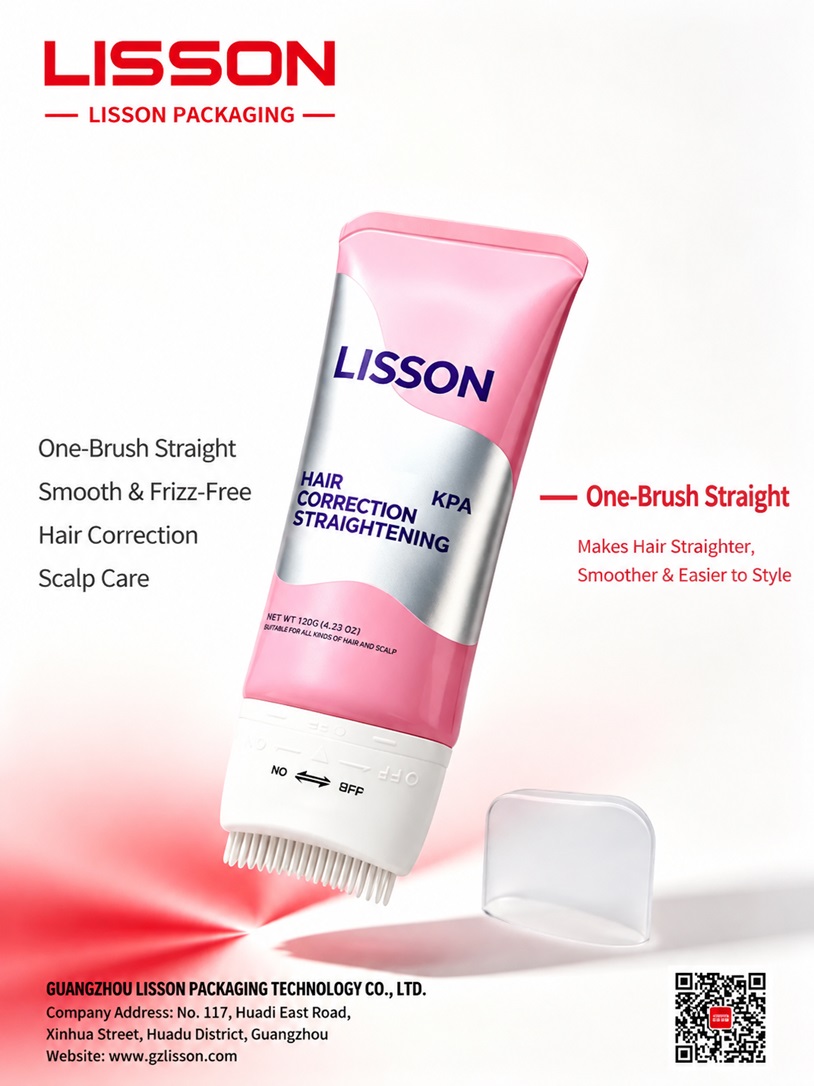
ON OFF Valve Hair Care Bottle


07 What Should You Consider When Choosing Laminated Tubes?

When selecting laminated tube packaging, brands should consider more than appearance and price.

Important factors include:

Product Formula Characteristics

Does the product contain:

  • Oils?
  • Fragrance ingredients?
  • Alcohol?
  • Acidic or alkaline components?
  • Active ingredients?

Shelf Life Requirements

Does the product require:

  • Longer storage time?
  • Higher oxygen barrier performance?
  • Better protection against external factors?

Design Requirements

What type of appearance does the brand want?

Examples include:

  • Matte finish
  • Gloss finish
  • Metallic effect
  • Transparent window
  • Large-area printing

Filling Process

Consider whether the filling process involves:

  • Hot filling
  • Cold filling
  • Automated production lines

Transportation Conditions

Will the product experience:

  • High temperatures
  • Low temperatures
  • Compression
  • Long-distance transportation?

These factors influence the selection of tube structure, thickness, diameter, shoulder design, cap type, and surface finishing technology.

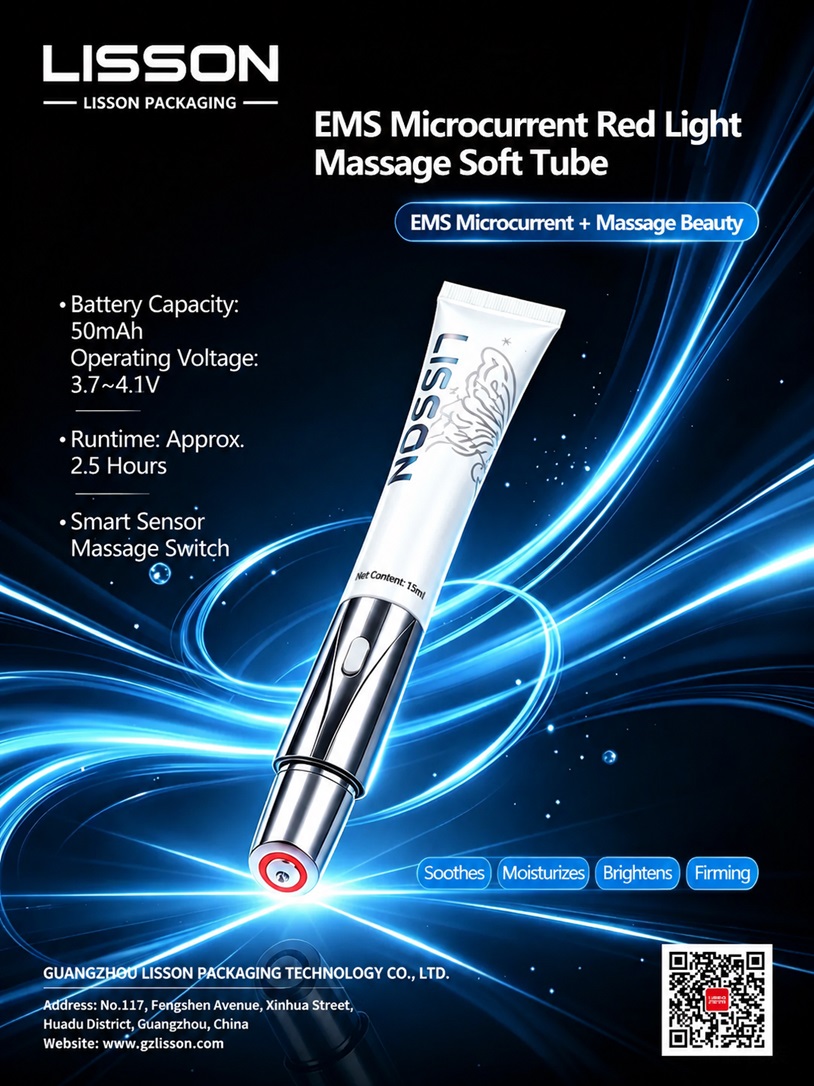
EMS Microcurrent Red Light Massage Soft Tube


Conclusion

Although a laminated tube may appear to be a simple packaging container, its production involves multiple technologies, including material lamination, barrier structure design, surface decoration, tube forming, injection molding, and quality inspection.

For brands, packaging is not only a container for the product but also an important element of brand identity, user experience, and market competitiveness.

From material selection to manufacturing technology, from structural design to visual appearance, choosing the right laminated tube solution helps products achieve stronger shelf appeal while maintaining stable and reliable performance throughout their lifecycle.

최신 블로그

메시지를 남겨주세요

메시지를 남겨주세요
저희는 화장품 포장 맞춤 제작 서비스를 제공합니다. 요구 사항을 남겨주시면 최대한 빨리 답변드리겠습니다!